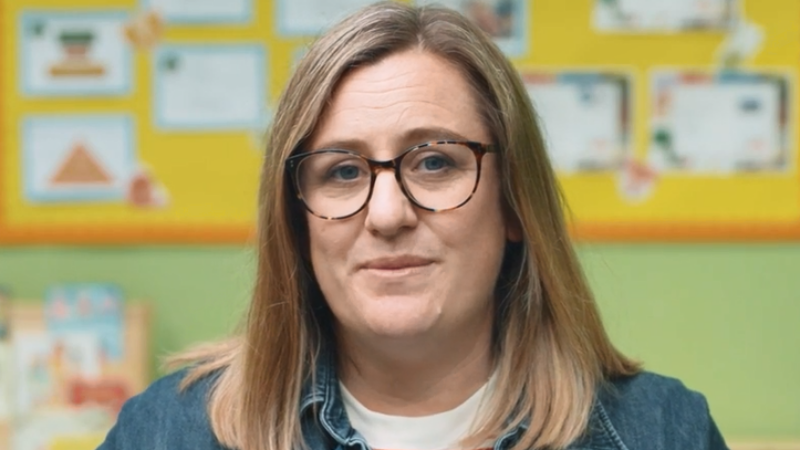
“The transition to parenthood is huge and it’s hard and you mustn’t feel that you have to struggle alone”, that’s the message from one brave parent Fiona Putnam who overcame her own mental health problems to help new parents.
Fiona is now a ‘peer engagement facilitator’ for South West London and St George’s Mental Health NHS Trust, which means she uses her experience of struggling with her mental health after having her daughter in 2015, to support others to transition from pregnancy to parenthood.
Fiona said: “My story was a very unusual one as I had no history of mental health problems and it hit me out of the blue. It was a medical emergency that involved a stay in a psychiatric unit and a year of recovery. With the support of the Trust and my family and friends, I have gone on to have another baby and I now work for the NHS helping other parents who are finding it difficult to cope.
“Thankfully what happened to me is rare. New parents often have mild to moderate mental health problems.
“I now run Baby Steps every fortnight in Sutton, a group for parents who are struggling post-birth.”
Fiona says talking about your feelings is vital: “Remember, opening up and talking about how you are feeling is the first step to recovery.
It’s okay not to be okay. Struggling after having a baby is completely normal.”
“There are several resources you can use if you or a family member need some support with their mental health and wellness after becoming a parent.”
Sutton Health & Care has worked with Fiona to produce a video to help signpost new parents to the services that are available locally.
Resources for support
- GP – you can talk with your GP who may prescribe medication to help. Medication does not have to be forever, and it is not an admission of failure. “I was on medication for a year after having my daughter and I was able to come off it without any side-effects” adds Fiona.
- Health Visitor – your health visitor will be able to listen to your concerns and offer advice and suggestions.
- Midwife – if you are still under the care of your midwife, they should be able to point you in the right direction for further help.
- Sutton Uplift – offers psychological therapies for anyone over the age of 18, such as Cognitive Behaviour Therapy (CBT). If you are in your first year of parenthood, your therapy will be prioritised.
- Home-Start – offers a number of courses such as Maternal Journal and Mums Together which can be hugely beneficial. It is a non-judgemental space where you can meet like-minded parents and be open about your experience.
- Sutton Mental Health Foundation – which is a community mental health support service where you can take advantage of well-being activities and events.
- The Health Visitors’ Wellbeing Space Group – which runs for seven weeks and has a weekly theme relevant to motherhood (speak to your health visitor for more details.)
- Groups for Dads – there are an increasing number of groups for dads who are struggling such as ‘Men in Sheds’, you don’t have to suffer alone.
- Baby Steps – is the group that Fiona currently runs and takes place every two weeks in Sutton.
Mental Health Crisis Line
If you live in Kingston, Merton, Richmond, Sutton and Wandsworth and you need mental health support in a crisis, you can call our 24/7 Mental Health Crisis Line. This line offers emotional support and advice to people who are affected by urgent mental health issues, at any time of the day or night.
This service is open to everyone: both children and adults of all ages, and to people who haven’t previously accessed mental health services.
