
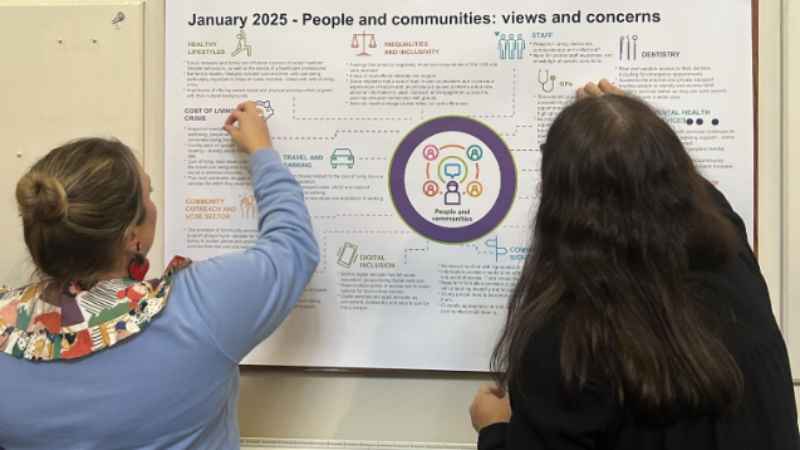
Co-production is a way of working which involves people who use health and care services, carers and communities in equal partnership, engaging with groups or individuals at the earliest stages of service design, development and evaluation.
These top tips offer a brief introduction and overview to the philosophy of co-production and suggestions around what best practice looks like, rather than a “how to” guide.
What is co-production?
- Co-production is a mindset and a way of working. You can use the philosophy of co-production with several different engagement methods.
- In co-production, everybody works together on an equal basis to create a service or come to a decision which works for them all. It is built on the principle that those who use a service are best placed to help design it.
- This is a new way of working and demonstrates we are committed to sharing power and decision-making and to an organisational culture of openness and transparency.
Making co-production work
- Agree who is the internal lead for sponsoring and backing this co-production work within the organisation.
- Take time to ensure everyone understands; what co-production is, what their role is, what they are being asked to be involved in and how a co-production differs from more traditional engagement approaches.
- Before the process of co-production begins, establish some guidelines for working together and stick to them.
- Everyone’s opinion should have equal value and respect.
- Spend time on introductions and what skills and perspectives people bring to the process rather than focusing on job titles.
- Coproduction should start at the very beginning and should continue throughout all stages of a project, rather than ending once the wheels are in motion.
- Come to the table with a blank agenda and build it with people who have an interest in/ or are affected by the area you want to explore.
- Start co-producing on a small scale and build up to bigger projects – letting people lead, not professionals.
- Don’t take responsibility for solving every problem—allow the group to find collective solutions.
- Acknowledge that a range of skills are needed for co-production and that you may need to seek additional support and expertise to help get things right.
- Ensure everyone involved has the knowledge, skills, confidence, and appropriate information to participate.
- One of the best ways to grow people’s confidence is to bring someone into the group who has had a good experience of co-production and can describe their own journey as someone with lived experience. This might be someone locally or nationally.
- See if there is someone who has lived experience who is willing and skilled to work with the lead to co-facilitate the sessions – this will model co-production in practice.
- Make no assumption that people have “insider” knowledge about how the NHS and local authorities work and its jargon.
- Create a two-way dialogue so participants hear back directly from the senior leaders about what has happened on the issues they have contributed to.
Bibliography
- Think Local Act Personal (accessed 2022). 1 Page profile for co-production (1 page profile for coproduction (2).pub (thinklocalactpersonal.org.uk))
- NHS England (accessed 2022). Integrated Personal Commissioning. Co-production for personal health budgets and Integrated Personal Commissioning Summary guide (Co-production for personal health budgets and Integrated Personal Commissioning (england.nhs.uk))
- NHS England & Improvement Experience of Care Team (accessed 2022). Top Tips to help you to coproduce effective, sustainable COVID-19 restoration plans at pace. ( top-tips-coproduction.pdf (arma.uk.net))
- Disability Advice Service Lambeth (2021). Reviewing and improving the use of Personal Health Budgets (PHBs) in South East London